


Whether you call them speed bumps, speed ramps or sleeping policemen, raised ramps are one of the simplest ways to slow vehicles on a private site. Flow plates do a different job: they allow traffic through in one direction only. This guide explains what each product does, when a site needs one, the other or both, and what to check so you can choose the right profile, size and fixings for your car park, yard or entrance.
Speed bumps and flow plates: what each one does
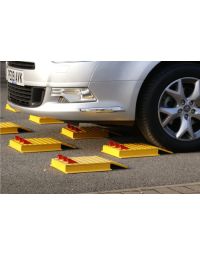
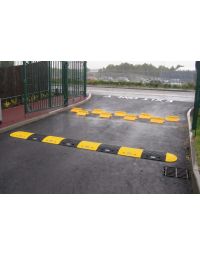
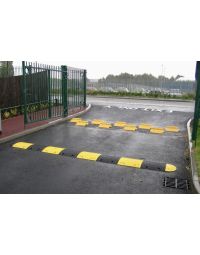
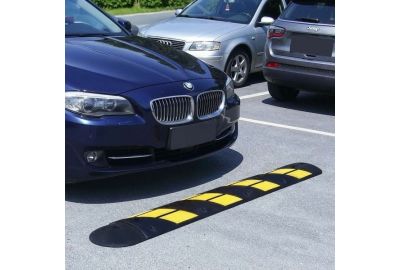
A speed bump, also sold as a speed ramp, is a raised profile laid across a route. Drivers slow down to cross it comfortably, which makes it useful near pedestrian routes, at site entrances, along car park aisles and in busy yards. The ramps in our speed bumps and flow plates range are designed to bring speeds down to around 5, 10 or 15 mph, depending on the height and shape of the profile. The actual crossing speed will vary with the vehicle, the driver and the layout of the site, so treat each rating as a guide to help you compare profiles.
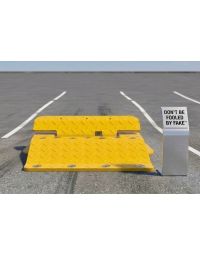
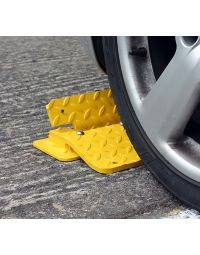
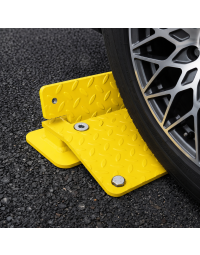
A flow plate controls direction rather than speed. Vehicles travelling the permitted way pass over the plate, while its raised teeth discourage travel in the opposite direction. Flow plates are typically used at one way entrances and exits, car park ramps and controlled access lanes.
|
Speed bumps and ramps |
Flow plates |
|
|---|---|---|
|
Main purpose |
Reduce vehicle speed |
Control the direction of traffic |
|
Typical locations |
Car park aisles, yard entrances, pedestrian crossing points, school and retail sites |
One way entrances and exits, car park ramps, controlled access lanes |
|
What to specify |
Profile height, speed rating, vehicle suitability, crossing width, fixings |
Vehicle types and weights, approach speed, road width, surface, fixings |
When you need speed bumps, flow plates or both
If your aim is simply to slow traffic, a speed ramp on its own is usually the right choice. If you need to discourage wrong-way vehicle movements, flow plates may be suitable, often alongside a compatible speed ramp.
Flow plates work best when vehicles approach them slowly and in a straight line. That is why our Standard Flow Plate and Speed Ramp Combi Packs pair a set of flow plates with a 50mm recycled PVC ramp. The manufacturer includes the ramp to restrict approach speed to 15 mph, which protects the plate mechanism over time. These kits are designed for cars and light vans and cover road widths from 2.5 to 6.5 metres. For heavier traffic, the HGV Flow Plate and Speed Ramp Combi Packs cover road widths from 3 to 6 metres.
A car park may have two separate problems: drivers approaching the exit too quickly and vehicles entering against the intended flow. A speed ramp addresses the first; suitable flow plates address the second. A compatible combined kit can bring the two together.
How to choose a speed ramp
Profile height and speed rating
Each ramp carries a speed rating from the manufacturer, linked to its height and shape. A taller profile encourages a slower crossing speed. The EasyRide modular speed reduction ramp, for example, comes in a 55mm profile rated for 10 mph and a 75mm profile rated for 5 mph. Our Heavy Duty 10 mph and Heavy Duty 5 mph ramps and the ECO speed ramps follow the same principle.
Choose the profile against the site’s intended speed, vehicle clearance and layout. Where pedestrians are present, consider separation and crossing arrangements alongside speed reduction.
Vehicle suitability
Load ratings differ from one model to another, so check suitability for all vehicles using the crossing, including occasional deliveries, and confirm whether load limits refer to vehicle or axle weight. The Heavy Duty 10 mph ramp is rated for HGVs with pneumatic tyres up to 40 tonnes, but it is not suitable for solid tyre vehicles such as some forklifts. The TOPSTOP Elite 5 mph ramp is also rated for HGVs up to 40 tonnes, with optional reinforcing rods for very high traffic volumes or heavy loads. If forklifts, pallet trucks or other site vehicles use the route, include them when you choose a model.
Crossing width and complete kits
Most of our ramps are modular. A run is built from centre sections joined together, with an end section at each side. To size a kit, measure the full width that vehicles can use at the crossing point, then choose the kit that covers it, adding centre sections if needed.
Section sizes vary by model. The Heavy Duty ramps use 500mm inner sections with 210mm end sections and come as ready made kits from 2 to 5 metres. TOPSTOP Elite kits run from 2.17 to 10.17 metres. EasyRide uses 1.8 metre centre sections with 225mm end caps (fixes to flat concrete surfaces only). Check the kit contents on the product page, as some kits include fixings and others list them separately.
Surface and fixings
Speed ramps are surface mounted and bolted down, so the surface needs to be sound enough to hold the fixings. The Heavy Duty ramps include bolts for fixing into concrete, and other surfaces may need different fixings. EasyRide has a channelled underside that allows for drainage and cable protection, and it can be used for permanent or temporary installation. Follow the installation instructions for your chosen model, or ask about our installation service, which is available in some areas.
Visibility and signage
Yellow and black sections, reflectors and cat's eyes help drivers see the ramp in good time, and several of our models include them. Manufacturers recommend warning signs alongside speed ramps, and our posts and panel signs range can help you add them.
At blind exits or restricted sightlines, traffic mirrors may help improve visibility alongside the wider traffic-management layout.
How to choose flow plates
Start with the vehicles using the route. The standard flow plate is designed for cars and light vans, and the manufacturer advises excluding vehicles over one tonne per axle. The surface mounted flow plate without springs suits cars and vehicles up to 7.5 tonnes. The Surface Mounted HGV Flow Plate is engineered for heavy goods vehicles.
Next, plan the approach. Pair flow plates with a speed ramp so vehicles cross slowly. The plate without springs has a recommended crossing speed of 5 to 10 mph. Vehicles should also approach in a straight line; for the standard flow plate, the manufacturer advises avoiding approaches more than 15 degrees out of line. For slopes, the plate without springs suits sloped entry and exit roads and multi storey car parks, and the HGV plate is designed for inclines and exits, while the standard plate should not be installed on a convex slope. Delineator posts can help make the intended vehicle route clearer as drivers approach.
These surface-mounted models avoid the recessed installation required by some alternatives, but still need a suitable substrate, drilling and secure fixing.The standard flow plate is fixed with six 75mm anchor bolts into concrete or high grade tarmac, and the HGV plate has a fixing pack for the same surfaces. Add clear one way signage so drivers know the permitted direction before they reach the plates, and make sure the area is well lit for use after dark. For the standard plate, the manufacturer also recommends regular lubrication of the spring and clearing debris from under the flap.
Who else uses the entrance? Include pedestrians, wheelchair users, cyclists and motorcyclists when planning the layout. Do not assume a plate specified for cars or HGVs is suitable for every user: confirm compatibility and any separate-route requirements before ordering.
Where separate pedestrian routes are needed, suitable guardrails can help define the route and guide people towards designated crossing points.
Private sites and public roads
The speed ramps and flow plates in our range are for private land, such as car parks, depots, yards, retail parks and school sites. On private sites, confirm the road’s status, permissions and any access rights before installation. Private ownership alone does not establish that highway requirements are irrelevant.
Public roads are different. Road humps and other traffic calming on the public highway are installed by the highway authority under their own regulations, so a business cannot add speed ramps or flow plates to a public road itself. If a route on your site meets a public road, keep your installation within the boundary of your land.
Getting the right recommendation
The quickest way to the right product is to share a few details about your site with our team:
-
the vehicles using the route, including the heaviest and any solid tyre vehicles;
-
the width of the crossing point;
-
the surface type;
-
whether traffic needs to flow in one direction;
-
any slope;
-
and the speed you want traffic to keep to.
With that, we can recommend a ramp, a flow plate or a combined kit that suits your site. If you are also managing who can enter, our parking posts and arm barriers work well alongside traffic calming.
Frequently Asked Questions
What is the difference between a speed bump and a flow plate?
A speed bump reduces vehicle speed, while a flow plate controls the direction of travel. They often work together: a speed ramp slows vehicles before they reach the flow plates, which helps the plates work as intended and protects their mechanism.
Which speed ramp height or profile should I choose?
Choose a profile based on how slowly traffic needs to move and the ground clearance of the vehicles using the route. A taller profile encourages a slower crossing. Each model has its own rating, such as the EasyRide 55mm profile rated for 10 mph and the 75mm profile rated for 5 mph, so check the guidance for the model you select.
Are these speed bumps suitable for HGVs and delivery vans?
It depends on the specific product. Some models, such as the Heavy Duty 10 mph ramp and the TOPSTOP Elite 5 mph ramp, are rated for HGVs up to 40 tonnes. Check the load rating and tyre type guidance on the product page against the vehicles on your site.
Can speed bumps be installed on concrete or tarmac?
Many of our ramps can be fixed to concrete or tarmac, but surface suitability varies by model. Check the selected ramp’s installation instructions and approved fixings before ordering. The Heavy Duty ramps include bolts for concrete, and flow plate fixings are designed for concrete and high grade tarmac. Check the installation instructions for your chosen product before you order.
How do I measure for a complete speed ramp kit?
Measure the full width vehicles can use at the crossing point. Then choose a kit that covers that width, made up of centre sections and an end section at each side, adding centre sections if needed. Check whether fixings are included in the kit or sold separately.
What should I check before choosing flow plates?
Check the vehicle types and weights the plate is rated for, the approach direction and angle, the speed vehicles will cross at, the signage needed to show the permitted direction, and the surface and fixings required. Our team can help you match the right plate and ramp combination to your site.