


At drop-off, a school entrance might need to handle pupils on foot, parents arriving by car and a delivery driver looking for reception. Each needs a clear route. This guide explains how fencing, gates, bollards and barriers can work together, what to check before ordering and what to send us if you’d like help comparing products.
What a school perimeter needs to do
Start with how the school runs on a busy day. Where do pupils arrive? Where do visitors report? Can a delivery reach its destination without using the main pupil entrance? The answers help you decide where fencing, gates and changes to the layout will make the most difference.
A school perimeter usually needs to support four things:
-
Pupil supervision: Make it easier for staff to see what’s happening and manage where pupils enter and leave.
-
Visitor access: Give visitors a clear route to reception and keep other entrances under appropriate control.
-
Vehicle and pedestrian routes: Plan separate routes where practicable, including for deliveries and contractors.
-
A welcoming frontage: Make the main entrance easy to identify and choose a finish that suits the school.
Walk the site at drop-off, pick-up and delivery times. A gate that is regularly propped open, or a queue that spills into a vehicle route, can tell you more about what needs changing than a walk around an empty site.
Choosing the right school fencing
Start by deciding what each stretch of fencing needs to do. The main entrance may need clear views for staff and a welcoming appearance, while a playground boundary may need to help prevent unsupervised exits. Assess each part of the site before choosing a fence type, height or finish.
|
Fencing type |
Where to consider it |
What to check |
|
Welded mesh fencing |
Playgrounds, sports areas and boundaries where staff need to see through the fence |
Check the mesh design, height and how panels join posts and gates. If climb resistance matters, ask for details of the exact system. |
|
Bow-top or vertical bar railings |
Frontages and entrances where visibility and appearance are important |
Check bar spacing, top profile, finish and how the railings meet the gates. Confirm that the design suits the pupils and the location. |
|
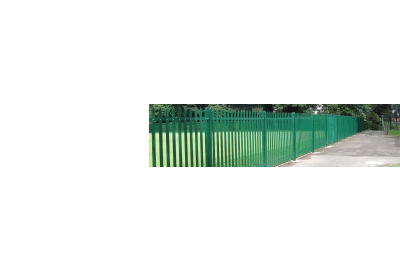
Palisade fencing |
Boundary sections where the site assessment calls for a stronger visual deterrent |
Check the top profile and proximity to pupil routes or play areas. Confirm whether the proposed design is suitable for that part of the school. |
Before comparing quotes, walk the boundary with the site team. Check what staff can see from their usual positions, where changes in ground level could leave gaps, and how new fencing will meet existing walls, posts and gates. Ask how the finish will hold up outdoors and what maintenance the system will need.
At busy entrances, plan where pupils and parents will wait and how they will reach the crossing or gate. Pedestrian guardrails can help guide people towards those points. If the layout also needs protection from vehicle impact, assess that separately and specify a system with documented performance for the risk.
Four questions help narrow the choice:
-
Can staff see through it? Open mesh and bar designs support supervision. Solid or close-boarded panels can create hidden areas.
-
How exposed is the boundary? Roadside fronts, rear fields and playground edges rarely need the same fence.
-
What finish suits the site? Galvanised and powder-coated finishes are generally chosen for durability outdoors; ask for the finish and coating details for any product you are considering.
-
Who looks after it? Low-maintenance systems suit schools without a dedicated site team.
Fencing alone will not manage how people move through a busy entrance. At pinch points, pedestrian guardrail barriers can guide foot traffic and keep waiting parents off the road or vehicle routes.
Gates, entrances and access control
Start with who needs to use each gate and when. A main pupil entrance, a visitor gate and a service gate have different jobs. Before comparing gate options, check:
-
Pedestrian and vehicle access: Can people on foot use a separate entrance from cars, buses and deliveries?
-
Visitor arrivals: Is the route from the entrance to reception obvious, without taking visitors through teaching or play areas?
-
Day-to-day operation: Who opens, locks and monitors the gate? Would a keypad, fob or intercom suit the way staff manage access?
-
Out-of-hours use: How will clubs, lettings and contractors get in and out when the main entrance is closed?
-
Emergency arrangements: Does the proposed locking and release arrangement work with the school’s evacuation plan?
If you’re considering a powered gate, ask the supplier and installer how the complete installation will address crushing and trapping risks, and who will inspect and maintain it. See HSE’s powered-gate guidance for more information.
For a gate enquiry, tell us whether it’s for pedestrians or vehicles, how frequently it will be used and whether you need manual or powered operation. If there’s an existing access-control system, include those details so compatibility can be checked.
Bollards and barriers: which product for which job?
At a busy school entrance, you might need to mark the edge of a drop-off area, guide people towards a crossing or protect a location from vehicle impact. Start with the job you need the product to do.
-
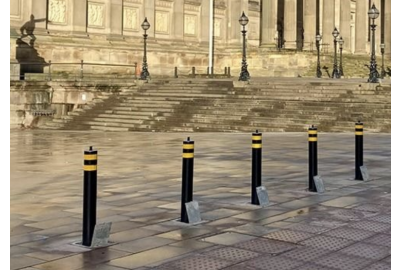
Street bollards can mark boundaries and discourage drivers from mounting verges or footways. Check visibility, spacing and the effect on pedestrian access.
-
Security bollards are an option to compare around entrances and frontages. If the job requires vehicle-impact protection, check the exact system’s documented performance and installation requirements.
-
Pedestrian guardrails can guide pupils and parents towards designated crossings, gates or waiting areas. Check that the layout leaves enough room for people to pass and queue.
-
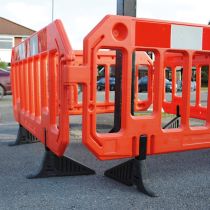
Chapter 8 barriers can help mark temporary works or guide people around a short-term closure. They should not be relied on to stop a vehicle.
Where vehicles regularly pass close to pupils, first consider whether the routes can be changed or separated. That decision will help determine what physical protection, if any, is needed.
Matching the problem to the solution
Use this table to work out where to start. The final choice depends on the layout, users and risks at your school.
|
If your problem is… |
Start by considering… |
Useful next step |
|
Pupils leaving unsupervised or visitors entering unnoticed |
How the boundary and gates work together, and what staff can see from their usual positions |
Send a plan showing the entrances and the part of the boundary you want to improve |
|
One ageing section of boundary |
Replacing that section and matching the adjoining fence, posts and gates |
Send photos, approximate dimensions and details of what needs to stay |
|
A frontage that needs better visibility |
Open railings and a gate layout that makes the entrance easy to identify |
Compare railings and guardrails, checking whether the individual product suits the intended use |
|
Crowding at drop-off or pick-up |
Where people wait, how they reach the entrance and whether the queue conflicts with traffic |
Compare pedestrian guardrails where guidance would help |
|
Vehicles passing close to a gate or walkway |
Separating the routes first, then assessing whether physical protection is needed |
Confirm the job before specifying bollards or a barrier system |
|
Deliveries using the pupil entrance |
A separate service entrance or delivery times that avoid pupil arrivals and departures |
Send a site plan showing delivery access, turning space and pedestrian routes |
|
Temporary works during term time |
A clearly marked work area and an alternative pedestrian route |
Compare Chapter 8 barriers where temporary delineation is needed |
Checks before you buy
Bring the site, safeguarding and facilities teams into the discussion early. Use the school’s risk assessment and approval process to agree what the boundary needs to achieve before comparing quotes.
-
Planning and permissions: Check with the local planning authority if you’re unsure whether the proposed height, position or work needs consent.
-
Accessibility: Check how people using wheelchairs, pushchairs or mobility aids will approach, open and pass through the gate.
-
Emergency exit: Check the proposed opening, locking and release arrangements against the school’s fire risk assessment and evacuation plan.
-
Powered-gate safety and upkeep: Ask how the proposed installation addresses trapping and crushing risks, and agree who will inspect and maintain it.
-
Fit with the existing site: Check levels, sight lines, existing walls and posts, and any known underground services before confirming positions.
-
Installation and handover: Agree when work can take place, how access will be managed during installation and who will look after the equipment once it is in use.
Common school perimeter mistakes to avoid
-
Reviewing the entrance when it’s quiet. Watch how people queue, cross and turn at the busiest times of the school day.
-
Choosing a fence before checking sight lines. Check what staff will be able to see from reception, the playground and their usual supervision points.
-
Replacing a gate without reviewing how it’s used. If staff frequently prop it open or visitors bypass it, check whether the route or access arrangements need changing as part of the project.
-
Comparing supply prices alone. Check what each quote includes for posts, fixings, groundwork, installation, finishes and ongoing maintenance.
-
maintenance, not just the headline cost.
Start your school perimeter enquiry
You don’t need a finished specification to speak to Barriers Direct. To get started, send us:
-
Your school postcode.
-
A photo or plan showing the area you want to improve.
-
A short description of the problem, such as an ageing boundary, crowded entrance or vehicles passing close to a walkway.
If you already have measurements, access requirements or a target installation date, include those too. Our team can help you compare relevant products and identify what else needs checking before you order.