


Wheel stops and parking blocks: types, sizes and where to fit them in a car park
Wheel stoppers are one of those deceptively simple products that do a serious job, and getting the right type, size and position makes all the difference between a well-organised car park and one that causes damage, complaints or worse. This guide explains the main types of wheel stops, the factors to consider when choosing their size and position, and what to check before ordering. Whether you are fitting out a single private yard or a multi-bay commercial site, you will find clear, practical answers here.
What wheel stoppers do, and why car parks need them
Wheel stops, wheel stoppers and parking blocks all refer to exactly the same thing, so whatever term brought you here, you're in the right place.
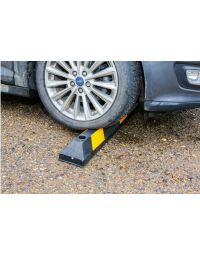
A wheel stop provides a raised contact point for the tyres, helping drivers position their vehicle within a parking bay during low-speed parking. When correctly selected and installed, wheel stops help drivers park more consistently. Their effectiveness depends on the vehicle, approach speed, positioning and fixing method.
That consistency is where the real value lies. Without a stop in place, drivers judge the distance themselves. Some pull up short, some overshoot, and some clip whatever happens to be in front of them. Over time, that means scraped walls, cracked kerbs, knocked pay stations, damaged EV chargers and, more seriously, pedestrians caught in the path of a slow-moving but unpredictable vehicle.
Correctly positioned wheel stops help reduce parking overshoot and vehicle overhang into surrounding spaces. They should not be relied upon as a vehicle restraint or as the sole protection for pedestrians or vulnerable equipment.
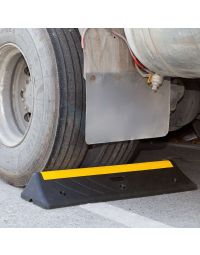
The applications are also broader than many people expect. Rubber wheel stops are suitable for applications including commercial car parks, hospital sites and private driveways. Loading yards and heavy-vehicle areas require models specifically suitable for the vehicles using them.Anywhere a vehicle needs to stop at a repeatable point, a parking block earns its place.
With EV charging infrastructure expanding rapidly across UK car parks right now, protecting charge points from accidental contact has become a particularly pressing consideration. Our Park Aid Hi-Vis Wheel Stops are built with exactly that in mind.
Which type of wheel stop suits which job?
Choosing between wheel stoppers is usually quite simple. Start with the vehicle type, then look at the surface, then decide whether the stop needs to stay put permanently or be moved later. That quickly narrows the choice.
|
Product type |
Best for |
Durability |
Visibility |
Fixing method |
Relocatable?
|
|---|---|---|---|---|---|
|
Recycled rubber wheel stops |
Standard car parks, offices, retail bays, everyday cars and light vans |
Good for regular use and weather exposure |
Moderate, with yellow panels for clear daytime sighting |
Typically bolted into tarmac or concrete |
May be relocated after removing fixings, subject to condition and manufacturer’s guidance. |
|
Steel wheel stops |
Permanent bays, high-traffic areas, protecting walls and other obstructions |
Excellent for long-term fixed use |
Moderate, with a yellow finish for easy spotting |
Bolted into tarmac or concrete |
No, generally left in place |
|
Heavy duty hi vis wheel stops |
Poorly lit car parks, yards, overnight sites and mixed vehicle areas |
Very good for tougher daily use |
High, designed to stand out more clearly in low light |
Bolted into tarmac or concrete |
No |
|
HGV wheel stops |
Loading bays, depots, service yards and heavy vehicle areas |
Built for repeated contact from larger, heavier vehicles |
High, thanks to their larger profile but be sure to check the model’s colour contrast and reflective features too |
Bolted into suitable concrete or other solid surfaces, depending on the installation area |
No |
In practice, rubber wheel stops are the easy all-rounder for most wheel stops for car parks. They are cost-effective, simple to fit and a sensible choice where you mainly have cars and smaller vans.
Steel parking blocks make more sense when you want a tougher permanent barrier, especially near walls, shutter doors or pedestrian routes. If that is what you need, these steel wheel stops with a 10-year warranty are a good example of a fixed, long-life option. That warranty applies to that product, rather than every steel model as a blanket rule.
For depots and loading areas used by trucks or coaches, choose wheel stops specifically designed for those vehicles and follow the manufacturer’s installation guidance.
How to choose the right size and length for the bay
Length and profile height matter more than most people realise when it comes to how a vehicle actually behaves in a bay. A longer parking block gives the driver more lateral guidance as they pull in, helping them straighten up naturally rather than guessing. A taller profile creates a firmer, more noticeable contact point when the tyre touches down. Get both right and your bays do a lot of the work for you.
When choosing size and length, keep these factors in mind:
-
Bay width — wider bays benefit from longer stops to guide larger vehicles effectively
-
Vehicle type — choose a model specified for the cars, vans, trucks or coaches expected to use the bay.
-
Surface material — concrete, tarmac and block paving all affect which fixing method and bolt spacing will work
-
Setback distance — where the stop sits within the bay determines exactly where the vehicle comes to rest
-
Visibility — high-vis finishes matter more in busy or poorly lit car parks
One thing that catches people out: fixing point spacing and recommended setback distances vary between models, sometimes significantly. Always check the product specification before installation, not after.
If you want a practical starting point, our heavy-duty wheel stops, available in three lengths, cover most standard car park and yard applications, including EV charger bays.
Where to fit wheel stops in a car park or yard
Fitting wheel stoppers properly is not guesswork. They need to sit square with the bay markings, centred across the bay width, so both front tyres meet the stop evenly. Incorrect positioning can allow tyres to miss a stop or produce an unsuitable final parking position.
For bays facing a wall, shutter or glazing, set the wheel stop across the front of the bay and keep it parallel with the end line. In many car bays, parking blocks end up around 300–500 mm from the obstruction, measured from the face of the stop to the wall or barrier. Allow sufficient clearance between the parked vehicle’s bodywork and the obstruction. Check the layout against the range of vehicles expected to use the bay.
For bays in front of footpaths, use the same straight, centred layout. The aim is to stop the vehicle before the front overhang reaches the kerb or paved route. A similar 300–500 mm starting range often works, but check that the parked vehicle cannot project into pedestrian space.
In EV bays, line the stop up with the bay markings first, then check the parked vehicle will finish close enough to the charger without trapping or stretching the cable. Post position and charge-port location matter here, so follow the product spec and test against the vehicles
expected to use the bay.
In accessible parking bays, check whether wheel stops are appropriate and position them so they do not obstruct pedestrian routes, transfer areas or access to the vehicle.
In loading bays, measure more carefully. Commercial vehicles often have different wheelbases, overhangs and approach points, so standard car park wheel stoppers may need different spacing.
As a rule, start with the product specification, then check it against the vehicle type and the obstruction you are protecting.
A simple buying checklist before you order
Before you place your order, run through these quick checks to make sure you get exactly what you need.
Vehicle type. Check that the selected model is suitable for the intended vehicles. Do not choose on height alone: vehicle suitability, ground clearance, construction and fixing requirements also matter.
Surface. Confirm that the surface is suitable for the chosen wheel stop and fixing system. Use only manufacturer-approved fixings or adhesives, and seek advice where the surface is loose, uneven or unsuitable for drilling.
Length. Select the length and number of units to suit the model, vehicle tyre positions and parking layout. A wider bay does not necessarily require a longer wheel stop.
Visibility. Choose a finish that contrasts with the surrounding surface, and consider reflective features where appropriate. Visibility also depends on lighting, weather and maintenance.
Trip risk. Any car park wheel stopper placed where people walk needs to be clearly marked and carefully positioned. Bright colour contrast is not just good practice — it is a genuine safety measure that is easy to overlook.
Fixings. Check whether fixings are included and confirm that they are approved for both the chosen model and the installation surface.
Consider the wider requirements of the site. Our wheel stops help position parked vehicles; protective bollards or hoop barriers may be appropriate around exposed equipment, speed bumps manage approach speed, and parking posts or arm barriers control access. Select each product for the specific job it needs to perform.”
Frequently Asked Questions
What is a wheel stop?
A wheel stop is a raised block installed within a parking bay to help drivers position their vehicle during low-speed parking. Correct selection and positioning can help reduce overshoot towards walls, equipment or pedestrian routes.
How to install wheel stoppers?
Install wheel stoppers square with the bay markings, centred across the bay width and parallel with the end line so both front tyres meet them evenly. They are typically bolted into tarmac or concrete, with setback and fixing spacing checked against the product specification and the vehicles using the bay. Follow the manufacturer’s instructions for positioning and fixing the selected model. Check the installation surface, intended parking direction, tyre positions and vehicle overhang, and ensure the final layout keeps pedestrian routes and access areas clear.”