


A sign can explain the rules, but the entrance layout, visibility and physical controls help drivers follow them. On industrial estates, logistics yards, car parks and private access roads, effective traffic management combines suitable speeds, clear routes and separation of pedestrians and vehicles wherever practicable. This guide explains how speed ramps, traffic mirrors, bollards and barriers can support that approach—and what to check before choosing them.
Why speed control matters on commercial sites
Commercial sites mix vehicle types in a way public roads rarely do. HGVs, vans, forklifts, delivery drivers, staff cars and pedestrians often share the same few hundred metres of tarmac. Add tight corners, reversing vehicles and visitors who do not know the layout, and a small speed difference can be the gap between a near miss and an injury.
Businesses need to assess vehicle movements and manage the risks to people using the site. Start with where vehicles and pedestrians meet, restricted visibility and areas where drivers can build up speed. Some improvements involve equipment; others involve changing routes, delivery arrangements or parking positions.
Speed bumps and ramps: slowing traffic where it matters
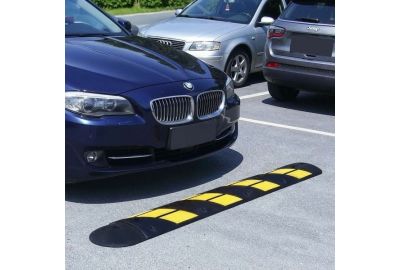
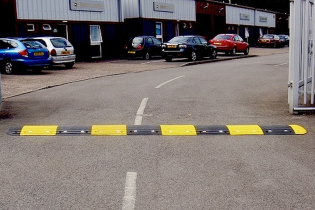
Physical traffic-calming measures can help reduce vehicle speeds, but they must suit the vehicles, loads and routes using the site. Start with the speed needed for safe operation, then compare suitable products and installation arrangements.
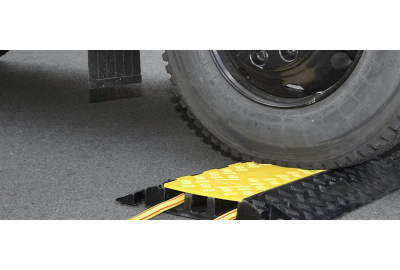
Explore our speed bumps and flow plates, remembering that they perform different jobs: speed ramps encourage slower movement, while flow plates are intended to discourage travel in the wrong direction.
Before choosing a speed ramp, check:
-
Ramp profile and intended speed: Compare the dimensions and intended operating speed of our 5mph speed ramps and 10mph speed ramps. The product label does not guarantee every vehicle will cross at that speed.
-
Vehicles and tyres: Check vehicle weight, ground clearance, tyre type and load stability. The linked ramps are not suitable for solid-tyre vehicles, including solid-tyre forklifts.
-
Surface and fixings: Confirm the supporting surface and specified anchors. The linked models are recycled PVC, with concrete-fixing bolts included; other surfaces may require different fixings or preparation.
-
Installed width: Plan the ramp arrangement around vehicle movements, drainage and safe pedestrian and cycle access. Use the manufacturer’s section dimensions to confirm the required kit.
-
Position and visibility: Drivers should recognise the feature and slow before reaching it. Check the approach, lighting, warning signs and clearance from junctions, crossings and operating equipment.
Choose locations and spacing through the site assessment rather than applying a standard distance. Where vehicles carry unstable loads or include specialist handling equipment, seek advice before introducing raised traffic-calming features.
Traffic mirrors: seeing the hazard before you reach it
A building corner, doorway or stack of pallets can hide approaching vehicles and pedestrians. Traffic mirrors can improve visibility at these restricted sightlines and help people check for approaching traffic before proceeding.
Locations worth assessing include:
-
Blind corners along one-way systems and delivery routes.
-
Loading bays and building corners where pedestrian and vehicle routes meet.
-
Driveway and car park exits where walls or other obstructions restrict the view.
Before choosing a mirror, check the viewing distance, directions that need to be seen, mounting position and suitability for indoor or outdoor use. Test the view from the position where drivers or pedestrians will actually use it.
First consider whether moving parked vehicles, stored materials or vegetation could improve direct visibility. A mirror supports a suitable layout, controlled speeds and pedestrian separation; it does not replace them. At exits onto public roads, seek appropriate advice rather than relying on a mirror to compensate for inadequate visibility.
One way systems and priority routes
Two of the most effective ways to cut conflict on a busy site are removing opposing traffic altogether and setting clear priority where two-way movement is unavoidable.
-
One-way systems can reduce opposing vehicle movements and reversing where the layout supports them. Check entrances, parking exits and delivery routes so drivers understand the arrangement wherever they join.
-
Priority arrangements can manage opposing movements through narrow sections. Provide clear instructions on both approaches, adequate visibility and suitable waiting space. Priority does not mean proceeding into an occupied passage.
Both rely on clear signage and road markings, which is where the sign meanings below come in. Both are also far more effective when backed by physical guidance.
What regulatory signs mean on private sites
Signs and road markings should communicate the same arrangement as the physical layout. Make speed restrictions, directions, crossings and waiting positions clear before drivers reach the point where they need to act.
Use familiar road-sign designs where suitable signs exist, and check visibility, mounting position and lighting. Private ownership alone does not determine whether road traffic law applies; the road’s status and public access also matter.
Explain arrangements to employees and visiting drivers, and review signs when routes or working practices change.
Barriers, bollards and markings: keeping traffic where it belongs
The right physical control depends on whether you need to identify a route, restrict access or protect people and structures against vehicle contact.
-
Bollards: Suitable models can define boundaries, discourage vehicle shortcuts or protect particular locations. Check dimensions, fixing requirements and documented performance before relying on a bollard for impact protection.
-
Pedestrian protection: Where people need protection alongside vehicle routes, specify an appropriate barrier system for the assessed risk. General-purpose rails and lightweight barriers should not be assumed to withstand vehicle impact.
-
Chapter 8 barriers: These can support temporary works arrangements and pedestrian guidance. They are not vehicle-restraint barriers and should not be relied on to stop a vehicle entering a walkway.
-
Cones and delineators: Useful for temporary route guidance and restrictions, provided they are conspicuous, stable and correctly positioned.
-
Road markings: Arrows, route lines and waiting-position markings can reinforce the intended layout. Select markings for the actual instruction rather than treating all hatching as having the same meaning.
Compare relevant bollards, Chapter 8 barriers and traffic cones and cone toppers according to the job each needs to perform.
Choosing the right measures for your site
Before ordering, walk the relevant routes during normal operations and consider these questions:
-
Where do vehicles and pedestrians meet? First consider whether routes can be separated. Where crossings remain necessary, assess visibility, approach speeds and suitable controls.
-
Where can drivers not see? Blind corners, exits and loading bays are candidates for traffic mirrors.
-
Where do vehicles build up speed? Long straights and downhill sections need speed control before the hazard, not at it.
-
Who is using the site? HGV-heavy sites need robust ramps and wider turning space. Sites with lots of visitors need clearer layouts and more obvious routes.
-
Do drivers know the rules on arrival? First-time visitors will not know your flow, so make sure every entry point is covered.
A combination of speed ramps, mirrors, barriers and clear markings does not need to be complicated. It needs to be consistent, well positioned and suited to the people who actually use your site.
You can browse the full range in Barriers Direct's traffic management and security section.
Frequently Asked Questions
Can I install speed bumps on private property?
Speed ramps can be appropriate on private premises, but confirm authority to alter the route, any shared-access rights and the road’s legal status before installation. Assess vehicle types, emergency access, drainage, pedestrians and cyclists, and follow the product’s installation requirements. Obtain highways or other specialist advice where the route’s status or permissions are unclear.
Which speed ramp should I choose for a car park or loading area?
Choose according to the site assessment and product specification, including ramp profile, vehicle weight, tyre type, ground clearance, surface and fixings. A 5mph or 10mph product description is a starting point, not a guarantee of crossing speed or suitability for every vehicle.
Where should traffic mirrors be placed?
Place them where drivers cannot see approaching traffic or pedestrians, such as blind corners, site exits and the corners of buildings. Position the mirror so the driver can see it from a safe stopping distance, with nothing blocking the view.