





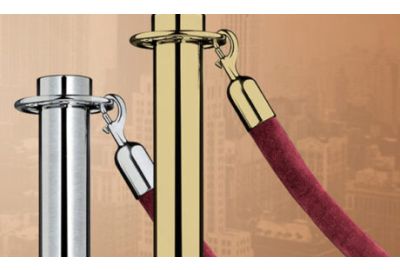
When the till queue reaches the main aisle and click-and-collect customers start joining the wrong line, the layout is usually the first thing to review. This guide shows how to plan retail queues for Black Friday and Christmas, choose between rope, retractable belt and outdoor crowd barriers, and prepare for the moments when demand is highest.
Why queue control matters more at Black Friday and Christmas
At peak times, queues can spill into entrances, aisles and collection areas. Use your own footfall, till and collection data to identify when and where that happens. Give each queue a clear starting point, keep space for people passing through, and decide who will redirect customers if the line reaches its planned limit.
Barriers help mark where to wait. Clear signs and staff at busy decision points help customers find the right queue, while the number of staffed tills or collection points affects how quickly they’re served.
How to plan a queue layout that actually works in a busy shop
Before you order a single post or belt, walk the shop floor properly. Even the best barriers will not fix a poor layout. Get the flow right first and you will spend less, avoid last-minute headaches and end up with a queue system that works when the rush hits.
Start with a simple plan:
-
Measure the space you actually have. Check widths, corners, door swings and any fixed obstacles such as promo bins or freezer ends. Tight areas usually need shorter runs between stanchions, while open spaces give you more freedom.
-
Choose a sensible starting point. The queue should begin far enough from the entrance that customers can still get in, get their bearings and move into the shop without being swallowed by the line.
-
Set a clear end point. Whether it is a bank of tills, a returns desk or click-and-collect counter, the route should guide people there naturally. No awkward doubling back. No guesswork.
-
Mark fire exits and escape routes first. These stay clear at all times. That is non-negotiable, even during your busiest Black Friday or Christmas trading periods.
-
Choose a layout that fits. A straight line may suit a narrow area; a zigzag layout can fit a longer queue into an open space. Check turning room for wheelchair users, pushchairs and trolleys, and provide a way to leave the queue without moving against it.
-
Support weak spots with the right barriers. Corners, narrow sections and junctions are where queue barriers, retractable belt barriers or rope barriers earn their keep by holding the line neatly in shape.
Important compliance note: Never place barriers across fire doors, final exits or evacuation routes. Peak trading is not an excuse to block safety-critical access.
Once the route is mapped, leave planned breaks for staff access where needed, but make sure the main queue route, turning space and any wider circulation areas still suit the people using them. That is especially important if you expect customers with wheelchairs, mobility aids or pushchairs. In short, do not just squeeze a queue into the gap you have. Check that it still works in real life.
Choosing retail queue barriers: rope, retractable belt or outdoor crowd barriers?
Choose the barrier for the job it needs to do. A fitting-room queue that stays in the same place has different needs from a click-and-collect lane that changes throughout the day.
|
Barrier type |
When to consider it |
What to check before ordering |
|
Retractable belt barriers |
Till queues, collection desks and layouts staff need to change during the day |
Belt length, base footprint, connection points and whether a compatible sign holder is available |
|
Rope barriers |
Premium tills, fitting rooms and front-of-house areas where presentation matters |
Rope length, how much it hangs between posts, base footprint and finish |
|
Outdoor crowd barriers |
A planned overflow queue on a suitable forecourt or outdoor waiting area |
Outdoor suitability, stability, how the barriers connect and how customers can leave the queue |
If you need a layout staff can adjust between quieter and busier periods, start by comparing Tensabarrier retractable belt barriers. Where the layout is more settled and appearance is a priority, compare rope and post finishes against your shop floor and signage.
Simple layout ideas for tills, click-and-collect and peak-time entrances
The right layout does most of the hard work for you. When customers can see exactly where to go without needing to ask, queues move faster, stress drops, and you stay in control even when the shop is heaving. Retractable belt barriers, rope barriers and stanchions are what make that possible, turning a chaotic shop floor into something that actually functions under pressure.
Single-file till queues
For several tills serving the same customers, consider one clearly marked queue feeding the next available till. Set out the posts using the manufacturer’s recommended span and check the usable width between the bases, especially at turns. Keep the entrance and exit obvious. Retractable belt barriers suit this kind of layout because staff can reconfigure them as demand changes.
Click-and-collect and returns lanes
These customers are not browsing. They want in and out, and folding them into your main till queue creates friction for everyone. A dedicated lane using retractable belt barriers, clearly signed from the moment someone walks through the door, keeps these routes separate and moving independently. It also takes the pressure off your till staff, who can focus on transactions rather than redirecting people who have ended up in the wrong place.
Peak-time entrance overflow
Plan where an overflow queue can wait before the indoor line reaches the entrance. If it would extend onto a shared forecourt or public pavement, check the arrangements with the relevant site manager or authority before setting it out. Keep entrances, escape routes and pedestrian access clear, and make sure people can leave the queue without stepping into moving traffic. Choose barriers suitable for the conditions and brief staff on when to open, extend or redirect the queue.
The small details that stop queues turning into chaos
Even the best-placed rope barriers and crowd control barriers will struggle if the surrounding details let them down. Signage, spacing, staff positioning and a solid back-up plan all play their part. Without them, even a well-designed layout can unravel quickly once footfall spikes.
Here are the details worth nailing before the rush hits:
-
Clear directional signage. Customers should never have to guess where the queue starts or where it ends. Posts and panel signs work brilliantly alongside retractable belt barriers and stanchions to guide people confidently through the space, without your staff having to play human signpost all day.
-
Check both the post spacing and the clear route width. Use the manufacturer’s guidance for the belt or rope span, then check that the bases and corners leave enough room for the people and equipment using the route.
-
Staff at decision points. Put team members at the start of the queue, at any split or merge, and near the tills. These are the spots where confusion builds fastest and a calm, visible presence makes a real difference.
-
Adequate lighting. Dimly lit queuing areas feel unwelcoming and make signage harder to read. Worth thinking about, particularly for entrance queues during dark winter evenings.
-
A surge plan. Know in advance how you will extend or redirect the queue if demand suddenly doubles. Have extra barriers ready to deploy and brief staff on the process before doors open, not during the chaos.
-
Expected wait time signage. A simple sign indicating how long the queue is likely to take manages expectations and can help manage expectations.
These finishing touches are what separate a professional retail queue management setup from one that looks thrown together on the day. Get them right, and the queue moves smoothly, customers stay calmer, and your team stays in control.
Get your seasonal queue setup in place before the rush hits
Planning for Black Friday, Christmas or another busy trading period? Start with the queue that causes the most disruption, then check what equipment you need for the main route and any planned overflow. Confirm stock and delivery for your chosen products before committing to a setup date.
If you’d like help choosing, send us a photo or sketch of the space, the approximate length of the queue route and whether it will be indoors or outdoors. Tell us if staff need to move the layout during the day, and we can help you compare suitable barrier options.
Frequently Asked Questions
What are the posts and ropes used to form queues called?
They’re usually called rope barriers or post-and-rope barriers. The individual posts are also known as stanchions.
Are rope or retractable belt barriers better for retail queues?
Retractable belt barriers are worth considering when staff need to change the layout regularly. Rope barriers can suit a more settled layout where the finish matters. Compare the base footprint and usable span before choosing either.
How many queue barrier posts do I need?
Sketch the route, including turns, entry and exit points, then check the recommended span for the belt or rope. Count the ends and corners first, then add any intermediate posts needed for the layout. Check the usable width between the bases before ordering.


