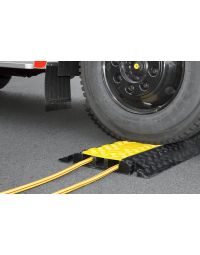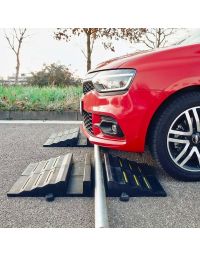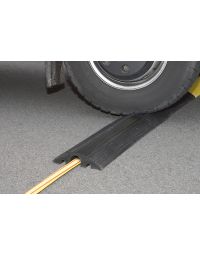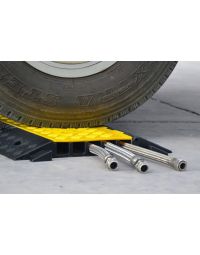



Picking the right cable ramp is simpler than most product pages make it look, but get it wrong and you are looking at damaged cables, failed kit and a liability problem that could have been avoided for the cost of a five-minute read. This guide explains load ratings, channel dimensions and the features to check before ordering. It covers pedestrian areas and vehicle crossings, including temporary events and industrial sites.
Cable ramp or cable protector: what do you actually need?
Loose cables trailing across a floor or roadway create two problems at once: they're a genuine trip hazard for anyone on foot, and they get crushed and damaged by anything that rolls over them, such as vehicles or handling equipment. The fix is straightforward enough, but the right product depends entirely on who — or what — will be crossing those cables.
There are two main families to choose from, and it's easier than you'd think to pick the wrong one.
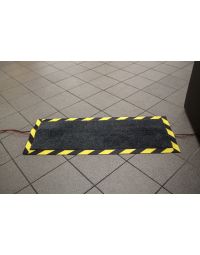
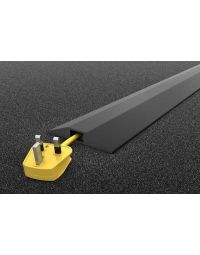
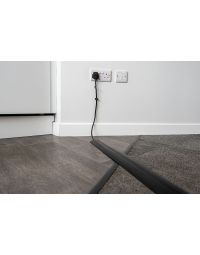
The first covers cable protectors and cable mats, designed for pedestrian areas. Low-profile cable mats sit flat to the floor, cover cables neatly and remove the trip risk without creating an obstacle in the process, just be sure to check that their edges and profile suit the route. They work brilliantly at exhibitions, events and busy indoor venues where vehicle access is excluded. Our CablePro Hi-Viz Mat is a great example: high-visibility colouring, a low-profile design and built specifically for environments where people are moving around quickly.
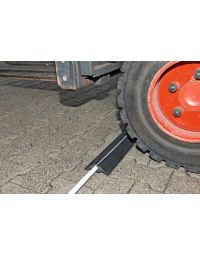
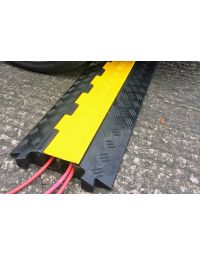
The second is the cable ramp, built for vehicle crossings. This is a heavier, more robust unit designed to let cars, vans, forklifts or HGVs drive straight over your cables without causing damage, but it’s important you choose a model approved for the vehicle types, loading and operating conditions involved. The ramp profile spreads the load across the channel beneath, protects whatever's running through it and gives vehicles a smooth, predictable crossing point.
Before you start comparing sizes or prices, settle this question first. If vehicles are involved at any point — even occasionally — you need a drive-over cable ramp. A pedestrian cable protector won't cope with that kind of weight, and under-speccing here is a false economy every single time.
Choose the right load class for the heaviest vehicle on site
Check the load rating and permitted vehicle types before comparing other features.Identify all vehicles expected to use the crossing, including occasional deliveries, and check their loading against the manufacturer’s rating basis. A ramp unsuitable for the traffic may fail or leave cables unprotected. Restrict access where the product is not approved for a vehicle.
Table 1: Load classes
|
Load class |
Indicative rating |
Rating basis |
Typical use |
Example vehicles (check product spec) |
|
Pedestrian only |
Up to 250 kg |
Confirm per product |
Indoor events, exhibitions, offices |
Foot traffic, sack trucks |
|
Light vehicles |
Up to 2 tonnes |
Per wheel / per axle / gross: confirm |
Car parks, driveways, retail forecourts |
Cars, small vans |
|
Medium duty |
Up to 8 tonnes |
Per wheel / per axle / gross: confirm |
Construction sites, warehouses, outdoor events |
Minibuses, larger vans; forklifts only if listed |
|
Heavy duty |
Up to 10 tonnes |
Per wheel / per axle / gross: confirm |
Industrial sites, busy logistics yards |
Rigid trucks, agricultural vehicles |
|
HGV-rated |
10+ tonnes |
Per wheel / per axle / gross: confirm |
Mixed-use sites, infrastructure, roadworks |
Articulated lorries, HGVs |
Table 2: Beyond weight, what to check before you buy
|
Consideration |
What to check |
Why it matters |
|
Rating basis |
Whether the stated capacity is per wheel, per axle or whole vehicle |
A 10-tonne axle rating and a 10-tonne gross rating aren’t the same thing |
|
Permitted vehicle types |
Suitability and exclusions for cars, vans, HGVs, forklifts and other equipment |
Weight alone doesn’t establish suitability. For example, our 3-channel ramp is rated to 10,000 kg axle weight and suited to HGVs, but not forklifts |
|
Operating conditions |
Maximum crossing speed, installation surface, any other restrictions |
Ratings usually assume specific conditions, such as a 5 mph limit |
|
Traffic frequency |
Suitability for expected crossings and the operating environment |
Occasional crossings and constant logistics traffic put very different stress on a ramp |
|
Accessories and configuration |
Whether the rating applies to the complete assembly and any accessories |
End ramps, connectors and wheelchair kits can have their own limits, such as the 200 kg wheelchair ramp kit |
Always specify for the heaviest vehicle on site, even if it only crosses once. Cable ramp load capacity is a hard limit, not a guideline. A rubber cable ramp rated for vans will not survive a loaded HGV, and a cable ramp that fails under load puts your cables, your team and your liability at serious risk.
One thing buyers often overlook: site conditions change. A location that starts as pedestrian-only can become a vehicle thoroughfare the moment a contractor needs access. If there's any chance of HGV traffic, don't gamble on a lighter rating.
Our three-channel cable/hose ramp is specified for axle weights up to 10,000kg and is listed as suitable for HGVs, but not forklifts. Check its channel dimensions and recommended maximum crossing speed of 5mph against your application. How many channels and what size cable or hose does it need to take?
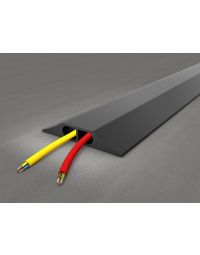
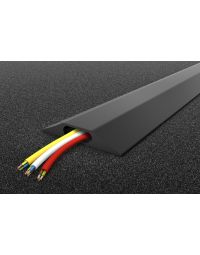
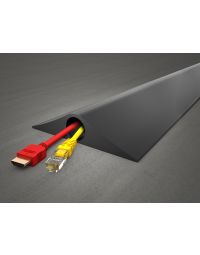
Getting the channel count and dimensions right is one of the most important steps when choosing a cable ramp — and it is easier to get wrong than you might expect. Too few channels and you end up routing cables around the outside of the unit, which defeats the point entirely. Channels that are too small can compress cables or hoses or prevent the lid from closing correctly.
Work through these points before you buy:
-
Number of cables or hoses — count every run that needs to cross the point, including anything you might add further down the line
-
Cable or hose dimensions — measure the outside diameter, or width and height for non-round cables, including any protective covering.
-
Channel clearance — allow sufficient space to avoid compression and follow the cable, hose and ramp manufacturers’ requirements.
-
Crossing width — measure the route that needs protection and calculate the required number of compatible sections and end pieces.
A note on hose ramps: Internal clearance matters even more when you are routing hoses. Check the hose’s outside dimensions, including any change during use, and ensure the channel does not compress it. Confirm that the lid closes correctly and any connectors remain clear of the crossing.For longer runs or sites where your cabling requirements are likely to grow, a modular heavy duty cable ramp lets you link additional sections together as needed, rather than starting from scratch with a new system.
Always confirm your channel count and exact cable or hose dimensions before ordering. Getting it wrong means delays and reordering costs that are easily avoided.
Which features matter most: visibility, indoor or outdoor use, and access needs
Load capacity matters, but it's far from the whole story. The right cable ramp also needs to be visible, safe underfoot, and suited to where it's actually being used — indoors, outdoors, or somewhere in between. Always check visibility, surface grip, environmental suitability and access for everyone using the route.
Here are the practical features worth checking before you buy:
-
High-visibility lids or hi-vis strips — contrasting lids or markings help users identify the crossing. Check visibility against the surrounding surface and available lighting.
-
Anti-slip grip surfaces — essential wherever foot traffic is high, particularly in wet or industrial conditions where a smooth surface quickly becomes a genuine risk
-
UV and weather resistance — outdoor rubber cable ramps need to shrug off rain, temperature swings and prolonged sun exposure without cracking or going brittle
-
Bevelled edges — check the ramp height and approach profile for the pedestrians and wheeled equipment using the route.
-
Modular design — check whether sections interlock and whether the ramp can be extended, so it adapts as your cable runs change
Plan an accessible route from the outset. Check that the crossing is suitable for wheelchair users and people with reduced mobility, or provide an appropriate alternative route. A wheelchair ramp kit for the 3-channel cable ramp is available, with a stated capacity of 200 kg and designed to make crossing safe and straightforward for everyone — a simple add-on that makes a real difference. Confirm compatibility, usable width and suitability for the combined user-and-wheelchair load before ordering.
As a rule, indoor cable protectors prioritise low-profile edges and grip, while outdoor options need to handle the elements on top of everything else. Matching features to your environment is just as important as getting the cable ramp load capacity right.
Best cable ramp choices for events, construction sites and warehouses
The easiest way to shortlist a cable ramp is to start with the setting, then check the heaviest traffic, the number of channels you need and the cable size.
|
Setting |
Typical traffic |
Sensible cable ramp choice |
Why consider it
|
|---|---|---|---|
|
Events, exhibitions and shows |
Pedestrians, trolleys, light site traffic |
CablePro Event Mat |
A low-profile option suited to temporary pedestrian areas where quick setup, clear visibility and trip hazard reduction matter most |
|
Construction sites |
Pedestrians, vans, site traffic or plant, depending on area |
Heavy Duty Cable Mat |
A practical option where you need more protection than an event mat, but do check the stated load rating against the vehicles using that route |
|
Warehouses and logistics yards |
Forklifts, pallet trucks, HGVs |
10 Tonne 3 Channel Ramp or Hose & Cable 2 Channel Ramp |
Better matched to vehicle routes because the load capacity is clearly part of the product spec, and you can choose between more channels or larger cable space |
For exhibitions, trade shows and public events, the CablePro Event Mat is a straightforward pick. It is designed for temporary use in busy pedestrian spaces, where you want cables covered neatly without creating a bulky obstacle.
Setting up for an event? Cables are only part of the picture. Our queue barriers help you manage entrances, registration desks and walkways, keeping visitors moving safely around your cable routes.
On construction sites, the right cable protector depends on where it is going. A pedestrian walkway may only need a rubber cable ramp or mat with good visibility and grip. A vehicle crossing point is different. That is where load class becomes the deciding factor, not just the site type.
In warehouses, yards and loading areas, traffic weight usually settles the question quickly. For forklift, pallet-truck or HGV routes, confirm explicit suitability for the equipment involved. A sufficient headline load rating does not establish compatibility. Then compare channel quantities and usable dimensions with the cables or hoses you need to protect.
Quick rule of thumb: buy for the toughest crossing point on site based on its expected traffic, cable dimensions and access requirements, not the easiest one. That prevents costly rework later.
Final buying checklist: how to choose with confidence
Run through these six questions before you buy and you will have everything you need to make the right call.
What traffic will it face? For pedestrian routes, check cable capacity, profile, grip and accessibility before selecting a protector .
What cable ramp load capacity do you actually need? Match it to your heaviest vehicle, not your average one. Compare the manufacturer’s rating with the relevant wheel, axle or vehicle loading, and check any vehicle exclusions. Under-speccing is the most common mistake buyers make, and it is also the most expensive.
How many cables, and how big are they? Count your cables or hoses, measure their diameter, and check the channel dimensions before you order. A tight fit causes damage; cramming in too many creates a trip and pinch risk.
Indoor or outdoor use? For outdoor installations, choose a model specified for the expected weather, temperature and surface conditions.Indoor use gives you more flexibility, though anti-slip surfaces still matter wherever there is foot traffic.
How long a run do you need? Most cable ramps are modular, so measure your crossing width and build the length you need using compatible end ramps and connector sections.
Do you need regular cable access or high-visibility markings? Check the loading method and lid design. Assess visibility separately against lighting and site conditions.
If any specification is unclear, confirm it before ordering. Browse the Barriers Direct cable ramp range to find the right fit for your site — fast despatch, no hidden costs and straightforward advice on hand if you need it.