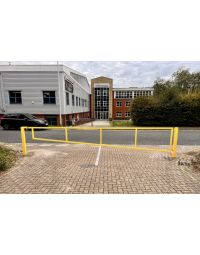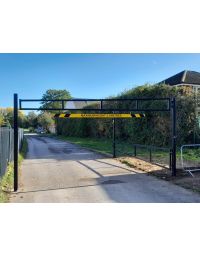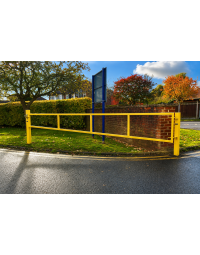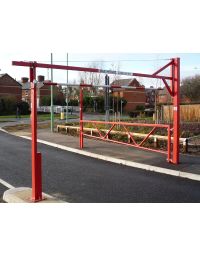



A commercial electric gate needs to suit your entrance, traffic levels and security requirements.This guide covers everything from choosing the right gate and planning groundworks through to installation stages, cost drivers, safety regulations and what to watch out for when comparing quotes. Get this right upfront and you will save yourself serious time, money and hassle down the line.
What commercial electric gate installation actually involves
Commercial electric gate installation is more considered than most site managers expect, and involves more than fitting the gate and motor. Getting to grips with the process before work starts means you can plan properly, budget accurately and avoid the kind of costly surprises that set projects back by weeks.
The process runs through five clear stages: site survey, design and specification, groundworks and infrastructure, gate fitting and automation, then testing and handover. Each stage feeds directly into the next, so an oversight early on rarely stays contained for long.
It all starts with a thorough site survey. A competent installer will assess your entrance width, ground conditions, traffic volume, security needs and power supply before any design work begins. Ask how the installer will assess your site and confirm the information needed before providing a final specification.
Design and specification come next. This is where gate type, size, operator system and access control options should all be confirmed in writing. The written specification should identify the gate, automation, access controls, safety measures and any exclusions from the quote, so as to avoid unexpected surprise costs further down the line.
Groundworks are a significant part of the installation scope. Foundations must suit the gate design and ground conditions. Identify underground services before excavation and allow for any changes they require. Power routing is another area where costs can shift unexpectedly, particularly on older sites without a conveniently located supply.
Gate fitting and automation is the most visible part of the job, but it only goes smoothly when the groundwork is solid. Operators, control panels, safety devices and access systems all need careful integration and configuration.Use equipment suited to the gate and its operating requirements, installed by competent contractors such as the ones Barriers Direct use.
Finally, the system must be tested, commissioned and handed over with full documented safety checks. The completed installation must meet applicable safety requirements. A site-specific risk assessment, suitable protective measures and documented testing are needed; meeting a standard alone does not establish that the gate is safe. Before accepting the installation, obtain the test records, operating instructions and relevant conformity documents.
Explore our automatic gates and installation service to discuss a system suited to your site.
Choosing the right gate for your site, traffic and security needs
Choose the gate type before planning foundations and cabling. Available space, entrance levels, traffic demand and security requirements will determine the suitable options.
Here are the key factors every site manager should work through before specifying a system:
-
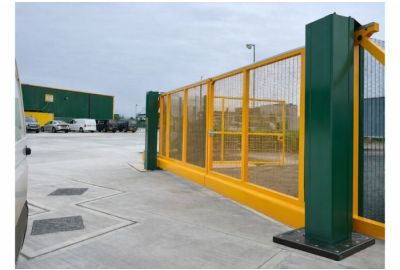
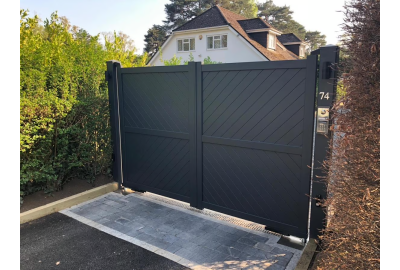
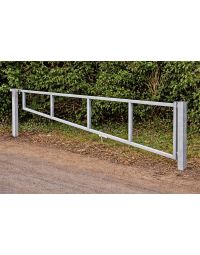
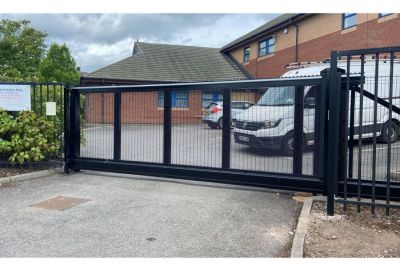
Sliding vs swing gates: Swing gates need clear space in front or behind to open. If your entrance is tight, sits close to a road, or has a steep slope, a sliding gate is almost always the better choice. A survey should establish which design suits the entrance.
-
Usage frequency and duty cycle: Specify the expected daily cycles and peak-hour demand so the installer can select suitable automation. Check the operator’s duty rating against expected use, allowing for busy periods and future demand.
-
Opening speed: High-throughput sites like distribution depots and logistics yards need faster opening times to keep vehicles moving. Slow gates create queues quickly, and queues create complaints.
-
Access control integration: Consider how people and vehicles will be authorised to enter. Keypads, key fobs, ANPR cameras and intercom systems all carry different implications for infrastructure, wiring and day-to-day management.
-
Security requirements: Define whether you need routine access control, perimeter security or a specified security rating. Check that the selected product provides the required performance.
|
Sliding Gate |
Swing Gate |
|
|---|---|---|
|
Space requirement |
Entrances with suitable side clearance. |
Entrances with space for the gate leaf to swing into or out of site. |
|
Typical usage level |
Low to medium |
All |
|
Best-fit scenario |
Depots, yards, restricted entrances, car parks, offices, storage facilities |
Car parks, offices, warehouses |
One thing many site managers don't consider early enough: electric gates rarely do the whole job on their own. Consider the gate as part of the wider entrance layout, including fencing, pedestrian access and protection for nearby equipment. For higher-security sites, pairing them with security bollards creates a layered perimeter that is far harder to breach. Include any additional protection in the initial layout so foundations, clearances and access requirements can be planned together.
The installation process step by step, from survey to sign-off
A professional electric gate installation follows a clear, structured sequence from first visit to final sign-off. Understanding each stage puts you in a stronger position to hold contractors accountable, plan around disruption and avoid nasty surprises mid-job.
-
Site survey and access assessment. A qualified installer visits to assess ground conditions, gate clearances, traffic flow and power availability. It's also the right moment to map any existing street furniture and site infrastructure, such as bollards, signage or drainage channels, that could affect gate positioning or cabling routes.
-
Groundworks and foundation preparation. Prepare foundations and supporting works to the approved gate design and manufacturer’s requirements. Identifying underground services before any digging starts is critical. Locate underground services before excavation and agree how they will be protected.
-
Cabling and ducting runs. Conduit is laid underground to carry power and control cables between the gate, control panel and entry devices. Agree the power supply route and capacity with your electrician before breaking ground. Confirm the electrical supply requirements and connection responsibilities before civil works begin.
-
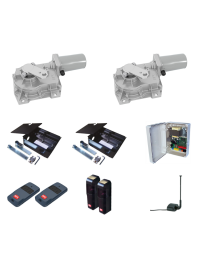
Motor and control panel installation. Install the gate structure and automation in the sequence specified for the chosen system, allowing any concrete foundations to reach the required strength. The panel governs everything from open and close timing to access control integration, so its position and specification should be agreed at survey stage, not on the morning of the install.
-
Safety device fitting. Photocells, safety edges and any other protective devices identified in the risk assessment are installed and wired. These are not optional extras: automatic gates on commercial sites must be protected against crushing, shearing and impact hazards under UK machinery safety legislation.
-
Commissioning and programming. The system is powered up, settings are configured and all access control devices are tested and programmed. This is where tolerances are set and the gate is tuned to run smoothly under the intended operating conditions.
-
Final testing and sign-off. The installer carries out a full functional safety test, documents the results and hands over operating instructions, warranty paperwork and a maintenance schedule.
Worth knowing: Commissioning and testing is where electric gate safety regulations are formally verified. Rushing or skipping this step can invalidate warranties and insurance cover, so always insist on documented test results before signing anything off.
For a standard commercial install, the full process typically takes one to two days. Complex sites with extensive groundworks, multiple access points or long cabling runs will extend that timeline considerably. Use the survey findings to agree the scope, responsibilities and installation programme.
What affects the cost of electric gate installation
The installed cost depends on the gate specification and the work required at your site. The final figure usually depends on the gate itself, the level of automation, and what has to happen on site to make everything work safely and reliably.
|
Cost driver |
What it does to the price |
|---|---|
|
Gate size and type |
Bigger gates need more materials, stronger posts and more labour. |
|
Access control |
Access-control costs depend on the equipment, number of users, wiring, connectivity and integration required. Keypads are a good budget-friendly option. Intercoms, video entry and ANPR systems push the price up because they need more equipment, wiring and setup time. |
|
Power supply |
If power is already close to the entrance, costs stay lower. If not, you may need trenching, cabling and a new dedicated circuit from the main board. |
|
Groundworks and foundations |
Heavy gates and sliding systems need solid foundations. Excavation, concrete, shuttering and curing time can all add labour, materials and programme time. |
|
Ground conditions |
Uneven levels, poor drainage, buried services, rocky ground or a high water table can all make commercial gate installation more complex and more expensive. |
|
Safety devices |
Photocells, safety edges, warning lights and signage are essential parts of a compliant automatic gate installation and should always be included in the budget. |
|
Ongoing maintenance |
Regular servicing and inspection are strongly recommended. In many cases they are important for warranty protection, reliability and demonstrating that the gate is being managed safely over time. |
Common extras people forget
-
Civil works such as kerbing, drainage changes or retaining walls
-
Ducting and conduit for power and data cables
-
Reinstatement of tarmac, paving or concrete after excavation
-
Traffic management if the entrance must stay live during the works
-
Electrical upgrades if the existing supply is not suitable
Confirm whether civil works, electrical works, reinstatement and temporary traffic arrangements are included or priced separately. These extras are where budgets often slip. A gate might look straightforward on paper, but the hidden costs usually sit below ground or back at the power source.
The best way to avoid additional surprise costs is to ask for a fully itemised quote. It should separate the gate, automation, access control, groundwork, electrical work and reinstatement where required.
Safety rules and legal checks you cannot skip
Safety must be considered from the initial design through to installation, use and maintenance. On a commercial site, it is a legal duty, and it needs proper design, testing and paperwork from day one.
In the UK, a safe commercial gate installation should be assessed against the current machinery supply rules and the standards that apply to powered gates. In simple terms, that means the installer should risk assess the gate, fit the right safety devices, test it properly and provide clear handover documents. Relevant standards include BS EN 12453 for powered-gate safety requirements and testing, BS EN 12604 for mechanical safety, and BS EN 13241 for product performance. The installer should confirm the applicable current editions and any additional requirements.
In practical terms, your automatic gate installation should include:
-
A site-specific risk assessment before work starts, covering vehicles, pedestrians, delivery areas and any vulnerable users
-
Protection at every hazard point, including crush, shear, impact and drawing-in zones
-
Safety devices where needed, such as photocells, pressure edges, guards and detection zones
-
Emergency stop or safe manual release arrangements, depending on the gate type and site layout
-
Documented safety testing at commissioning, including measured force tests where force limitation forms part of the protective measures.
-
Warning signs and user instructions so staff and visitors know how the system operates
-
A proper handover pack, including test results, maintenance guidance and the declaration of conformity
One important point: there is no single magic force figure that covers every powered gate in every position. Force-test requirements depend on the hazard, measurement position and protective measures used. Permitted force levels depend on where the force is measured, how long contact lasts and what other protections are fitted. That is exactly why proper testing matters. If your installer cannot show measured results, do not sign the job off.
Once the gate is live, the duty does not stop. Regular electric gate maintenance, recorded inspections and dated service logs are essential. Keep records of inspections, servicing, faults and repairs to support safe operation and maintenance.
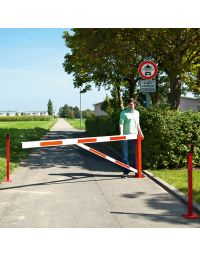
If you also need to manage vehicle entry, compare automatic arm barriers and stainless steel bollards alongside the gate options.
How to plan a smoother installation and avoid expensive mistakes
Good preparation is the single biggest factor that separates a smooth electric gate installation from one that overruns, overspends and causes unnecessary headaches on site.
Before you invite anyone to quote, gather the basics: a site plan or rough sketch of the entrance, details of traffic volumes and vehicle types, any access control requirements, and confirmation of where the nearest power supply is. This information helps identify suitable gate options, supporting works and any further checks needed.
When speaking to installers, ask these questions directly:
-
Is the quote fixed, or could costs change once work begins?
-
Who is responsible for conformity assessment of the completed system, and which marking, declaration and safety records will be supplied?
-
Who carries out the electrical connection, and is that costed in?
-
What is the lead time from order to installation?
-
What does the warranty cover, and who handles call-outs?
Ask for the scope, exclusions and responsibilities to be confirmed in writing before ordering.
To keep disruption to a minimum, agree a clear installation schedule before work starts. Identify which areas need to be temporarily closed, let staff or tenants know in advance, and make sure groundworks are finished before the installation team arrives. Check that preparatory works are complete and ready for the next installation stage.
Do not overlook maintenance either. Arrange maintenance and safety checks at intervals suited to the gate, manufacturer’s instructions and level of use. A maintenance contract can help organise this, but does not by itself establish compliance.
When you are ready to take the next step, speak to Barriers Direct. We supply automatic gates and works with experienced installation partners across Great Britain. Speak to our team about the gate, access controls and installation requirements for your site. Send us your entrance dimensions, site photographs, expected traffic levels and access requirements to discuss suitable options and request a quote.
Frequently Asked Questions
What is the average cost to install an electric gate?
There is no single average cost, because electric gate installation varies widely by site. Price depends on gate size and type, automation level, access control, power supply, groundworks, ground conditions and required safety devices. A fully itemised quote is the best way to budget accurately and avoid hidden extras.
Is a sliding or swing gate better for my site?
The choice depends on available space, ground levels, traffic demand and security requirements. Swing gates need clear space to open; sliding gates need suitable side clearance. A survey should confirm which design fits your entrance.
What information do I need to request an installation quote?
Provide the entrance width, site photographs or a layout sketch, expected vehicle types and traffic levels, access-control requirements and any known power-supply details. Confirm whether you need a new gate or automation of an existing gate.